Image credit: Youflavio, Wikimedia Commons (CC BY-SA 4.0)
Modern Icons: The Global Tenor Age (1960s–1990s)
The Global Tenor Age: Icons Who Brought Opera to Millions
Across the second half of the twentieth century, the tenor voice moved beyond the traditional opera house to reach an unprecedented international audience. Radio, recordings, television and large-scale concerts transformed leading tenors into globally recognised cultural figures. Yet their influence was rooted first in the opera house: in distinctive vocal technique, interpretation, repertoire and stage presence. This guide explores the tenors who defined the Global Tenor Age from the 1960s to the 1990s, examining the qualities that distinguished their voices and the influence they continue to exert on operatic performance today.
Franco Corelli: Defining the Heroic Italian Tenor
Franco Corelli combined exceptional vocal power with an unusual capacity for dynamic contrast. His singing could move from controlled pianissimo to brilliant dramatic climaxes, qualities that made him particularly suited to the heroic Italian repertoire. Born in Ancona in 1921, Corelli initially studied engineering before pursuing a professional singing career. Roles including Radamès in Aida, Calaf in Turandot, Manrico in Il trovatore and Cavaradossi in Tosca became central to his international reputation. Alongside the scale of the voice, his commanding stage presence helped establish Corelli as one of the defining dramatic tenors of the post-war operatic era.

Franco Corelli at Teatro di San Carlo, Naples, 1956.
Photo via Archivio Storico del Touring Club Italiano – Wikimedia Commons, CC BY-SA 4.0.
Corelli’s influence extended beyond sheer vocal power. During the 1960s, his performances demonstrated how a dramatic tenor could combine brilliance in the upper register with flexibility, dynamic control and an intensely physical stage presence. Photographed at Teatro alla Scala during the 1962 recording of Bellini’s Norma with Maria Callas and Nicola Zaccaria, Corelli was by then firmly established among the leading international tenors of his generation. Roles such as Calaf, Manrico and Andrea Chénier demonstrated the combination of vocal scale and dramatic intensity that became central to his artistic identity.

Franco Corelli, Maria Callas, and Nicola Zaccaria during the 1962 recording of Bellini’s Norma at Teatro alla Scala, Milan.
Photo via Touring Club Italiano – Wikimedia Commons, CC BY-SA 4.0.
Luciano Pavarotti: Bringing Italian Opera to a Global Audience
Luciano Pavarotti combined an immediately recognisable vocal timbre with exceptional clarity of diction, legato and ease in the upper register. His early reputation was built firmly within the Italian operatic tradition, particularly in the lyric and bel canto repertoire, before recordings, television appearances and large-scale concerts introduced his voice to audiences far beyond the opera house. This combination of vocal technique, distinctive personality and international visibility made Pavarotti one of the defining figures of the Global Tenor Age.

This formal portrait captures Luciano Pavarotti during the period in which his public identity became almost inseparable from the modern image of the Italian tenor. His international career encompassed La Scala, the Metropolitan Opera and the Royal Opera House, while recordings and televised performances brought the sound of the operatic tenor into homes around the world.
Luciano Pavarotti – Photo by John Mathew Smith /Kingkongphoto, licensed under CC BY-SA 2.0.

Pavarotti’s home in Modena, now preserved as the Casa Museo Luciano Pavarotti, offers a more personal perspective on the singer behind the international career. The Steinway grand piano and collection of stage costumes connect his public performances with the private environment in which music remained central to his life. The costumes preserved there also document specific roles and productions from different stages of his operatic career.
Maison de Luciano Pavarotti, Modena – Photo by Marie Thérèse Hébert & Jean Robert Thibault / CC BY-SA 2.0

The stage costumes preserved at the Casa Museo Luciano Pavarotti provide a visual record of the roles that shaped his operatic career. Among those represented are productions of Leoncavallo’s Pagliacci and Verdi’s Un ballo in maschera, works that required very different combinations of lyricism, dramatic intensity and vocal weight. Seen together, the costumes also illustrate the theatrical dimension of Pavarotti’s career beyond the recordings through which many international listeners first encountered his voice.
Photo by Marie Thérèse Hébert & Jean Robert Thibault, via Flickr. Licensed under CC BY-SA 2.0.

This costume was worn by Luciano Pavarotti as Enzo Grimaldo in Ponchielli’s La Gioconda at the War Memorial Opera House in San Francisco in 1979. Enzo is a demanding tenor role requiring sustained lyric line alongside considerable dramatic intensity, particularly in music such as the aria Cielo e mar!. Preserved at the Casa Museo Luciano Pavarotti in Modena, the costume provides a direct visual connection to Pavarotti’s work in the heavier Italian repertoire beyond the roles with which he is most popularly associated.
Photo by Marie Thérèse Hébert & Jean Robert Thibault /Flickr, licensed under CC BY-SA 2.0.
A later stage of Pavarotti’s career is represented by his costume for Riccardo in Verdi’s Un ballo in maschera, performed at the Royal Opera House, Covent Garden, in 1995. Compared with Enzo in La Gioconda, Riccardo places different demands on the tenor, combining lyrical elegance with sustained dramatic singing. The two costumes therefore document not simply Pavarotti’s stage history, but the breadth of Italian repertoire he continued to perform across different periods of his career.

Riccardo demonstrates an important aspect of Pavarotti’s mature Verdi singing. The role requires elegance and flexibility in its lighter passages, but also sufficient vocal breadth for the opera’s dramatic ensembles and climaxes. Pavarotti’s approach retained clarity of line and Italianate phrasing while allowing the voice to expand naturally as the dramatic demands increased. His performances of the role therefore provide an instructive example of how lyric qualities can be maintained within more substantial Verdi repertoire.
Costume worn by Luciano Pavarotti as Riccardo in Verdi’s Un Ballo in Maschera, Royal Opera House, London (1995) – Photo by Marie Thérèse Hébert & Jean Robert Thibault / Flickr, licensed under CC BY-SA 2.0.
Pavarotti’s significance ultimately rested on the unusual combination of technical accomplishment and accessibility. The clarity of his Italian diction, sustained legato, brilliance of the upper register and immediately recognisable timbre were grounded in the operatic tradition, yet communicated with extraordinary immediacy to listeners far beyond it. His association with Nessun dorma, particularly through television and large-scale concert performances, became one of the defining examples of opera entering global popular culture without losing its connection to the classical stage. In this respect, Pavarotti stands at the centre of the Global Tenor Age: an opera singer whose technique, repertoire and personality helped introduce the tenor voice to millions.
Plácido Domingo: Expanding the Tenor Repertoire
Plácido Domingo built one of the broadest repertoires of any leading tenor of the modern era, moving from lyric roles into increasingly dramatic Verdi, Puccini and verismo repertoire. His interpretations ranged from Cavaradossi in Tosca and the title role of Andrea Chénier to the exceptional dramatic demands of Verdi’s Otello. Rather than being defined by a single vocal category, Domingo developed his repertoire alongside the changing weight and colour of his voice. His dark timbre, dramatic instinct and musical intelligence allowed him to sustain an unusually long international career, later extending his work into conducting and arts leadership.

This 1975 San Francisco Opera production of Andrea Chénier captures Domingo in a role particularly suited to the darker colour and dramatic intensity of his tenor. Giordano’s writing demands both lyrical expression and sustained power, with the voice required to remain flexible through intimate passages before expanding into larger dramatic climaxes. Domingo’s combination of vocal weight, textual intensity and stage presence made Chénier one of the roles closely associated with his international career.
Plácido Domingo and Josella Ligi in *Andrea Chénier*, San Francisco Opera, 1975 – Photo via Wikimedia Commons, licensed under CC BY-SA 4.0.
Domingo’s career also illustrates how the role of the international tenor was changing during this period. Alongside his operatic repertoire, he participated increasingly in recordings, concerts and collaborations that brought classical singing into contact with musical theatre and popular culture. His association with Andrew Lloyd Webber and Sarah Brightman in the mid-1980s is one example of this crossover, demonstrating how established opera singers were beginning to reach audiences through contexts far beyond the traditional opera house.

This 1985 photograph of Plácido Domingo with Andrew Lloyd Webber and Sarah Brightman captures that intersection between opera, musical theatre and international popular culture. Domingo’s willingness to work across these boundaries helped broaden the public profile of the operatic tenor—a development that would become even more pronounced with large-scale concerts and televised performances in the following decade.
Andrew Lloyd Webber, Sarah Brightman, and Plácido Domingo in 1985. Public domain image via Wikimedia Commons.
Domingo’s importance to the Global Tenor Age lies partly in this adaptability. His career demonstrated that an operatic tenor could develop through increasingly dramatic repertoire while also participating in the expanding worlds of recording, television and international concert performance. His later work as a conductor and arts administrator extended that influence beyond singing itself, making his career unusually broad in both repertoire and cultural reach.
José Carreras: Lyric Intensity and Dramatic Expression
José Carreras brought a distinctive combination of lyric warmth and dramatic intensity to the tenor repertoire. His youthful voice was notable for its concentrated timbre, expressive phrasing and immediacy of communication, qualities particularly effective in roles where romantic lyricism develops into dramatic conflict. From Don José in Carmen and Cavaradossi in Tosca to the title role of Verdi’s Don Carlos, Carreras built interpretations around the emotional trajectory of the character rather than vocal display alone. This ability to combine lyrical line with theatrical urgency became one of the defining characteristics of his singing.

Carreras’s portrayal of the title role in Verdi’s Don Carlos provides an important example of his lyric-dramatic approach. In the 1972 production at the Théâtre du Capitole in Toulouse, the young tenor brought a notably vulnerable quality to the conflicted Infante of Spain. The role requires sustained legato, flexibility and sufficient dramatic weight for music that moves between private emotional expression and larger confrontations.
Carreras approached these demands through expressive phrasing rather than sheer vocal force. His youthful timbre and concentrated tone suited the character’s idealism, while the intensity of his delivery gave greater weight to moments of political and personal conflict. In music such as “Io la vidi”, the long Verdi line allowed the lyrical qualities of his voice to remain central to the dramatic interpretation.

This second image from the 1972 Toulouse production shows Carreras at only 25, at a formative stage of his international career. His early assumption of Don Carlos is particularly revealing because the role sits at the intersection of lyric and dramatic tenor singing: the voice must preserve flexibility and beauty of line while carrying increasingly substantial Verdi ensembles. Carreras’s youthful vocal colour gave the character an immediacy that became closely associated with his interpretation.

Photo by Franco Bordoni. Licensed under CC BY-SA 4.0.
In this 1984 production of Ponchielli’s La Gioconda at Barcelona’s Gran Teatre del Liceu, Carreras appeared as Enzo Grimaldo, a role requiring considerably greater dramatic weight than much of the lyric repertoire associated with his earlier career. Enzo combines expansive melodic writing with passages of sustained intensity, demanding both flexibility and considerable vocal stamina.
Carreras brought his characteristic warmth of timbre and emotional immediacy to the role while allowing the voice to take on greater dramatic weight. His interpretation demonstrates the gradual expansion of his repertoire during this period and provides an interesting contrast with the more youthful vocal profile heard in his earlier Don Carlos performances.
Carreras’s place within the Global Tenor Age rests on the immediacy of his communication as much as on the beauty of the voice itself. His performances combined an essentially lyrical vocal identity with an increasing willingness to explore more dramatically demanding repertoire. The contrast between his early Don Carlosand later Enzo illustrates that development particularly clearly.
His international career, recordings and later appearances with the Three Tenors brought this distinctive vocal personality to audiences far beyond the opera house. Yet the qualities that established his reputation remained fundamentally operatic: warmth of timbre, expressive phrasing, textual intensity and a strong identification with the characters he portrayed.
Jussi Björling: Legato, Balance and Vocal Purity
Jussi Björling represented a different model of tenor singing from the more overtly dramatic personalities of Corelli, Pavarotti, Domingo and Carreras. His voice was distinguished by exceptional evenness of tone, disciplined breath control and a sustained legato that allowed the musical line to remain central to the interpretation. Combining the clarity of his Swedish vocal background with an Italianate approach to phrasing, Björling became particularly admired in the lyric and spinto repertoire of Verdi, Puccini and the French operatic tradition.

Photographed at the Royal Dramatic Theatre in Stockholm in 1958, Björling was already established as one of the leading international tenors of his generation. His interpretations of Verdi, Puccini and French lyric repertoire became particularly admired for their consistency of line and restraint. Rather than relying on exaggerated dramatic effects, Björling maintained clarity of tone and phrasing even as the music increased in intensity.
Björling’s technique was characterised by economy rather than display. The voice remained remarkably integrated across the range, supported by disciplined breath management and an ability to sustain long phrases without disturbing the musical line. His legato and tonal consistency made him particularly effective in repertoire where lyric beauty must coexist with increasing dramatic pressure. This balance helps explain why his recordings remain important reference points for singers studying the relationship between breath, phrasing and vocal efficiency.
How the Global Tenor Age Changed Opera
The tenors of this period expanded both the artistic possibilities and the public reach of the operatic voice. Franco Corelli demonstrated the dramatic power and physical presence of the heroic Italian tenor; Luciano Pavarotti combined bel canto principles with extraordinary international accessibility; Plácido Domingo showed how widely a tenor’s repertoire and professional identity could develop; José Carreras brought lyrical immediacy to increasingly dramatic roles; and Jussi Björling remained a benchmark for legato, balance and vocal economy.
Their differences are as important as their similarities. There was no single model of the great twentieth-century tenor. Timbre, repertoire, technique and dramatic temperament shaped each career differently, while recordings and broadcasting allowed audiences to compare these distinctive approaches on an unprecedented scale.
By the closing decades of the twentieth century, the tenor had become more than a leading voice within the opera house. Television, recordings and large-scale international concerts brought operatic singing to audiences who might never have attended a staged opera. The Global Tenor Age therefore represents both a period of remarkable individual voices and a fundamental change in how opera reached the wider world.
Hire an Opera Singer in London or the UK
The legacy of the great twentieth-century tenors continues wherever opera is performed beyond the traditional theatre. When planning live opera for a wedding, private celebration, gala dinner, memorial service or corporate event, repertoire, venue acoustics, accompaniment and the scale of the audience all influence how a performance should be arranged. London-based Italian tenor Vasili Karpiak performs operatic arias and Italian repertoire for private and corporate events across the UK, with programmes tailored to the occasion and setting.
Planning a Live Opera Performance for Your Event
A live tenor performance can be arranged around the character and format of the event, from a single operatic highlight to a longer programme of Italian arias and songs. Repertoire can be selected according to the atmosphere of the occasion, while practical considerations such as piano or backing-track accompaniment, performance space and timing can be discussed in advance.
Hire a Classical Tenor – Book Vasili Karpiak to discuss repertoire, performance format and arrangements for your event.
Recommended Books
Explore the lives, voices, and legacies of the tenors who shaped opera in the modern era through these carefully selected biographies and memoirs.
Disclosure: This section contains Amazon affiliate links. If you make a purchase through these links, I may earn a small commission at no additional cost to you.
Pavarotti: My Own Story
By Luciano Pavarotti and William Wright
A candid, engaging memoir tracing the tenor’s rise to global fame, filled with reflections on technique, family, and the demands of opera.

My First Forty Years
By Plácido Domingo
Domingo shares the milestones of his life and career, offering insight into his broad repertoire and early foundations.

Plácido Domingo: A Musical Life
By Helena Matheopoulos
A rich narrative chronicling Domingo’s vocal achievements and his roles as conductor, administrator, and cultural figure.

Singing from the Soul: An Autobiography
By José Carreras
Carreras recounts his musical journey, personal setbacks, and triumphant return to the stage after illness.

Franco Corelli: Prince of Tenors
By René Seghers
An extensively researched biography tracing Corelli’s journey from engineering student to internationally acclaimed tenor. Drawing on interviews with family, colleagues, and rare archives, the book offers rich insight into both the backstage drama and vocal mastery that made Corelli opera royalty.

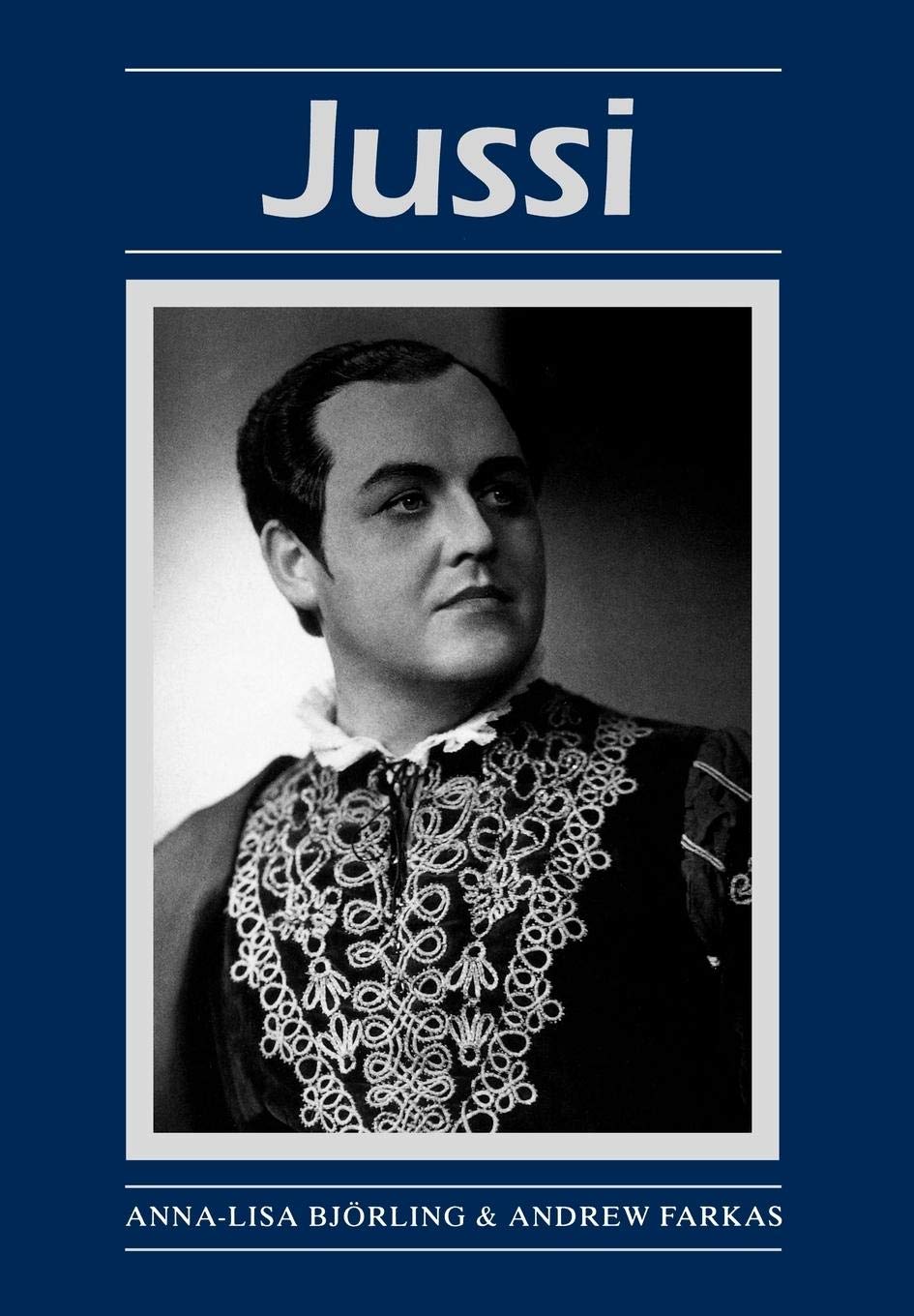
Jussi Björling: Jussi
By Anna‑Lisa Björling and Andrew Farkas
This is the first English‑language biography of Sweden’s beloved tenor, written with the cooperation of his widow. It weaves together archival material and intimate recollections to depict both the man and his uniquely lyrical voice.


Explore More Insights on Opera & Vocal Mastery
© VASILI KARPIAK – THE ITALIAN TENOR | OPERA & PRIVATE CONCERTS in London, Scotland, Ireland & Beyond. This original blog content is owned and created by me. No part may be copied, republished, or used elsewhere without written permission.
