Few composers understood the emotional power of the human voice more profoundly than Vincenzo Bellini. In his operas, time seems to slow. Long melodic lines unfold with extraordinary calm, intimacy, and emotional clarity, creating the unmistakable atmosphere of Italian bel canto opera.
To understand the romantic soul of the Italian lyric tenor tradition, one must return to the early nineteenth century — the golden age of bel canto. In the theatres of Milan, Venice, and Paris, opera was becoming more poetic, intimate, and emotionally direct. At the centre of this transformation stood Bellini, a composer whose gift for melody would shape the future of European music.
Today, Bellini’s operas continue to hold a special place in the repertoire of opera singers in London, across the UK, and throughout Europe. His music demands exceptional breath control, elegance of phrasing, and emotional restraint from the tenor voice. Whether performed in major opera houses, historic concert venues, luxury weddings, or private gala events, Bellini’s melodies continue to create an atmosphere of refinement, romance, and timeless Italian artistry. This editorial explores Bellini’s musical world, the bel canto tenor tradition, and the enduring appeal of Italian opera performance in modern cultural life.
Vincenzo Bellini and the Bel Canto Tradition
Born in 1801 in Catania, Sicily, Vincenzo Bellini possessed a temperament that contrasted sharply with his vibrant Mediterranean birthplace.
Image: Catania. La casa di Bellini (1876), woodcut print by Bonamore, originally published in L’Illustrazione Italiana (No. 49), via Wikimedia Commons.

If Gioachino Rossini was the master of sparkling theatrical brilliance, and Gaetano Donizetti the architect of dramatic intensity, Bellini became the poet of melancholy and lyrical introspection. His music carried a rare sense of refinement, emotional restraint, and lyrical elegance.
Although Bellini died at just 33 years old, his influence on Romantic Italian opera was immense. He composed relatively few operas, yet each one helped move Italian opera away from decorative virtuosity toward deeper emotional expression. Bellini believed music should not simply ornament the text, but reveal its emotional truth. He famously declared that opera must “make people weep, shudder, and die through the singing.”
Bellini achieved this not through overwhelming orchestral power, but through the expressive beauty of the human voice itself. In many of his operas, the orchestra becomes transparent and restrained, leaving the singer completely exposed. Without orchestral weight to hide behind, the tenor must rely on purity of tone, breath control, and expressive simplicity — qualities that continue to define great bel canto singing today.
Bellini’s Long Melodic Line
One of Bellini’s defining qualities was what Giuseppe Verdi later described as “melodie lunghe, lunghe, lunghe” — melodies that are long, long, long. To the listener, a Bellini aria may sound effortless and natural. In reality, sustaining these endless melodic lines requires extraordinary breath control, technical discipline, and emotional restraint from the singer.
Legato and the Breath-Driven Melody
At the heart of Bellini’s vocal writing lies the art of legato. In the bel canto tradition, legato means far more than simply singing smoothly. It is the seamless connection of vowels and phrases into one continuous stream of sound, supported entirely by breath.
For the lyric tenor, this requires a voice that feels suspended on air rather than pushed from the throat. Great opera singers performing Bellini in London, the UK, and major European venues often create an atmosphere of remarkable stillness through this unbroken vocal line. The audience instinctively follows the singer’s phrasing, creating a sense of stillness and emotional focus.
Appoggio and Lyrical Phrasing
To sustain Bellini’s long phrases, singers rely on appoggio — the classical Italian method of breath support. Through careful coordination of the diaphragm, ribs, and lower back, the singer controls the release of air with extraordinary precision.
This allows Bellini’s melodies to expand and contract naturally, often rising gently toward moments of emotional intensity before fading into near-whispered lyricism. The challenge is not loudness, but control, elegance, and continuity of tone.
Expressive Simplicity in Bellini
Unlike the later verismo composers such as Puccini or Mascagni, Bellini avoided excessive theatrical weight and vocal force. Emotion in bel canto opera is conveyed through phrasing, colour, and melodic beauty rather than dramatic outbursts.
This expressive simplicity gives Bellini’s music its aristocratic elegance. Even in moments of heartbreak or despair, the music retains dignity, refinement, and balance. That atmosphere continues to make Bellini especially effective for opera performances in historic venues, luxury cultural events, and refined private concerts.
Bellini and the Lyric Tenor
Bellini composed during a period of major transformation for the tenor voice. To understand his music fully, one must look at the singers for whom these operas were written — above all, the legendary Giovanni Battista Rubini.
Giovanni Battista Rubini and the High Tessitura
Rubini was considered the leading tenor of the 1820s and 1830s and became Bellini’s most important muse. Unlike many modern dramatic tenors, Rubini sang with remarkable lightness, flexibility, and ease in the upper register. His voice could ascend to astonishing heights while retaining sweetness and lyrical elegance.
Because Bellini composed specifically for Rubini, many of his tenor roles sit unusually high in the voice. The singer must spend extended periods in the passaggio — the transitional area between registers — while maintaining smooth phrasing and tonal beauty. Even today, Bellini remains one of the most demanding composers for the lyric tenor repertoire.
Mezza Voce and Purity of Tone
Rubini was also celebrated for his mastery of mezza voce — the ability to sing softly while preserving clarity, resonance, and projection. In Bellini’s music, the quietest moments are often the most emotionally devastating.
When a skilled Italian tenor performs Bellini with true mezza voce, the atmosphere in the room changes instantly. Conversations stop, the audience grows silent, and attention narrows completely toward the voice. This vulnerability and purity of tone remain among the greatest challenges — and greatest rewards — of bel canto singing.
Major Bellini Operas for Tenor
Bellini’s operas helped shape the image of the Romantic tenor hero — poetic, emotionally intense, and deeply lyrical. Across these works, the tenor voice became not only dramatic, but profoundly expressive and psychologically human.
Il Pirata and La Straniera: The Birth of the Romantic Hero

With Il Pirata (1827), Bellini and librettist Felice Romani transformed Italian opera. The tenor role of Gualtiero introduced a new type of Romantic hero — emotionally tormented, isolated, and consumed by doomed love.
Image: Stage design for Bellini’s Il Pirata by Alessandro Sanquirico (1777–1849) via Wikimedia Commons.
In La Straniera, Bellini moved even further away from decorative vocal display. Instead of florid ornamentation, the tenor expresses emotion through sustained melodic lines, subtle phrasing, and tonal colour. The result is music of haunting psychological intensity.
I Capuleti e i Montecchi: Lyricism and Tragedy
Bellini’s I Capuleti e i Montecchi (1830), inspired by the Romeo and Juliet story, presents another refined bel canto challenge. Although Romeo is written for mezzo-soprano, the tenor role of Tebaldo remains central to the opera’s emotional tension.
Tebaldo combines noble lyricism with flashes of martial energy. His music demands elegant phrasing, vocal control, and emotional balance — qualities that define the bel canto tenor tradition.
La Sonnambula: Pastoral Elegance and Expressive Simplicity
If Il Pirata represents dark Romantic drama, La Sonnambula (1831) offers a world of pastoral innocence and lyrical delicacy. The role of Elvino requires exceptional sweetness of tone and refined emotional control.

Image: Albina Maray as Amina in Vincenzo Bellini’s La Sonnambula (1851), lithograph by Eduard Kaiser via Wikimedia Commons.
Albina Maray (1832–1889) was an Austrian soprano associated with the refined bel canto tradition of the nineteenth century. This lithograph portrays her as Amina, Bellini’s celebrated sleepwalking heroine, reflecting the graceful theatrical style and visual elegance of Romantic Italian opera.
Elvino’s music leaves no room for vocal heaviness or exaggeration. Arias such as “Prendi, l’anel ti dono” demand floating lyrical phrasing, emotional sensitivity, and remarkable vocal purity. Bellini’s expressive simplicity remains one of the greatest challenges for any lyric tenor.
Norma: Vocal Elegance and Patrician Restraint
For many listeners, Norma (1831) represents Bellini’s greatest achievement. Set in ancient Gaul, the opera combines classical grandeur with intense emotional drama through the tragic relationship between Norma, Adalgisa, and the Roman proconsul Pollione.

Image: Tempio d’Irminsul (1832), stage design for Vincenzo Bellini’s Norma by Alessandro Sanquirico, digitized by the Bibliothèque nationale de France via Wikimedia Commons.
The tenor role of Pollione requires both authority and refinement. Although he is a Roman military leader, Bellini’s writing demands elegance rather than brute force. In arias such as “Meco all’altar di Venere,” the singer must sustain long heroic phrases while maintaining lyrical control and flawless legato.
Even at its most dramatic, Bellini’s music avoids excess. The emotional tension comes not from shouting or vocal weight, but from restraint, phrasing, and tonal beauty — qualities that remain central to great bel canto performance today.
I Puritani: The Zenith of Bel Canto Tenor Singing

Bellini’s final opera, I Puritani, premiered in Paris in 1835 only months before the composer’s death. The role of Arturo remains one of the most difficult achievements in the lyric tenor repertoire.
Image: Théâtre Royal Italien. Salle d’armes from I Puritani (1835) by Luigi Verardi after Domenico Ferri, restored by Adam Cuerden via Wikimedia Commons.
Arturo’s famous aria “A te, o cara” unfolds with extraordinary lyrical tenderness, demanding complete control of breath, line, and tone. Later in the opera, Bellini pushes the tenor voice to astonishing heights, including the legendary high F in “Credeasi, misera!” — a note that still challenges even the greatest bel canto specialists.
To sing Arturo successfully requires exceptional vocal freedom, elegance, and technical discipline. For many opera singers, I Puritani remains the ultimate test of bel canto artistry.
Great Interpreters of Bellini
The survival of Bellini’s operas has depended on generations of singers dedicated to the discipline of bel canto. Across the twentieth century and into the modern era, a remarkable lineage of lyric tenors preserved this refined vocal tradition.
Tito Schipa became legendary for his elegance of phrasing, expressive simplicity, and refined mezza voce. Later, Nicolai Gedda brought extraordinary technical ease and brilliance to Bellini’s demanding high tessitura, particularly in the role of Arturo.
Alfredo Kraus represented the aristocratic ideal of bel canto singing. His disciplined technique, vocal focus, and effortless control allowed him to perform Bellini with remarkable purity and stylistic elegance.
Carlo Bergonzi demonstrated how deeply Bellini’s legato tradition influenced later Italian opera, particularly Verdi. Luciano Pavarotti introduced the beauty of bel canto singing to a global audience through the radiant clarity of his upper register and lyrical phrasing. José Carreras, meanwhile, brought youthful passion and emotional vulnerability to Bellini’s Romantic heroes.
Today, true bel canto tenors remain highly specialized artists. Singing Bellini convincingly requires not only vocal beauty, but also discipline, breath control, stylistic intelligence, and emotional restraint — qualities that continue to define the finest traditions of Italian opera performance.
Bellini, Melody, and Emotion
Nearly two centuries after his death, Bellini’s music continues to affect audiences with remarkable emotional intensity. Much of this power comes from his extraordinary understanding of melody and the human voice.
In Bellini’s operas, melody does more than express emotion — it becomes the emotion itself. His long vocal lines often resemble sighs, whispered confessions, or moments of quiet longing. Even without elaborate orchestration, the emotional atmosphere remains direct and deeply human.
Bellini’s influence extended far beyond Italian opera. Frédéric Chopin admired his lyrical style, and many of Chopin’s Nocturnes echo the long, flowing phrases of Bellini’s vocal writing. Even Richard Wagner openly acknowledged the emotional beauty and expressive power of the Italian melodic tradition.
Bellini and Italian Opera in Modern London
The relationship between Britain and Italian opera has deep historical roots. During Bellini’s lifetime, London became one of Europe’s most important operatic centres, with audiences gathering to hear the great bel canto singers perform works such as La Sonnambula and I Puritani.
That tradition continues today. Across London and the UK, Bellini’s music remains central to the repertoire of lyric tenors and opera singers specialising in the bel canto style. In an age dominated by amplification and fast-moving media, the natural resonance of the operatic voice continues to offer audiences a rare sense of intimacy and authenticity.
Whether experienced in a major concert hall, a historic church, or an elegant private venue, Bellini’s music creates an atmosphere of refinement and emotional stillness. The combination of breath-driven phrasing, lyrical beauty, and acoustic resonance remains one of the defining experiences of live Italian opera performance.
Bellini at Luxury Cultural Events
The elegance of Bellini’s music makes it especially suited to refined cultural events, gala evenings, and historic venues. Throughout history, Italian opera has been closely associated with aristocratic patronage, architectural grandeur, and ceremonial occasions.
Today, live opera performance continues to bring a distinctive atmosphere to luxury events across London and Europe. In candlelit halls, historic estates, embassies, and private residences, the sound of an Italian tenor singing Bellini can transform the emotional character of a room within moments.
Unlike background music, bel canto singing naturally commands attention through the beauty and projection of the unamplified human voice. The long lyrical phrases and emotional restraint of Bellini’s music create a sense of stillness, elegance, and dramatic intimacy that remains uniquely powerful in live performance.
Italian Opera for Weddings and Private Events
Bellini’s operas were built around themes of love, devotion, longing, and emotional vulnerability — qualities that continue to resonate strongly in modern weddings and private celebrations.
Whether performed in a cathedral, a country estate, or an intimate candlelit setting, the lyric tenor voice brings a sense of ceremony and timeless elegance to important occasions. A floating Bellini melody or Italian romantic aria can create an atmosphere that feels both deeply personal and unmistakably cinematic.
For many couples and event hosts, live Italian opera offers more than entertainment. It creates a lasting emotional experience rooted in European musical tradition, acoustic beauty, and the expressive power of the human voice.
The Lasting Legacy of Bel Canto
Bellini believed opera should move the listener completely through the beauty of singing itself. Nearly two centuries later, his music continues to embody the essence of the bel canto tradition: breath, legato, emotional restraint, and lyrical purity.
The great lyric tenors who perform Bellini today preserve one of the most refined traditions in European music. Their artistry depends not on vocal force alone, but on control, elegance, phrasing, and emotional intelligence.
Whether heard in a world-famous opera house or during an intimate live performance in London, Bellini’s music still creates moments of rare stillness and beauty. In those suspended melodic lines, the modern world briefly disappears, leaving only the timeless resonance of the human voice.
Further Reading on Bellini
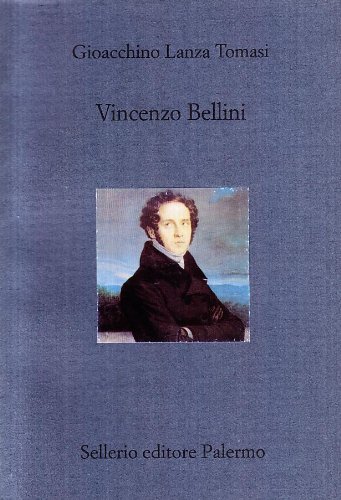
Readers interested in Bellini’s life and the atmosphere of nineteenth-century Italian opera may also explore this well-reviewed Italian-language biography by Gioacchino Lanza Tomasi, former superintendent of the Teatro Massimo in Palermo. The book offers a concise introduction to Bellini’s artistic world, Sicilian background, and the development of the bel canto tradition.